Knee Pain: Causes, Physiotherapy Treatment and Exercises
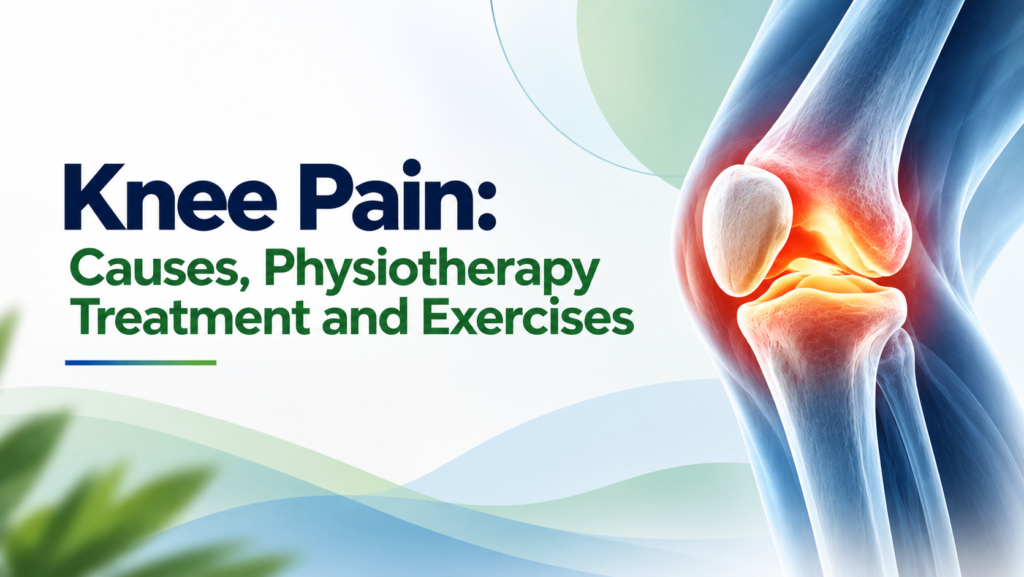
Knee pain can change the way you walk, climb stairs, exercise, work, or even get up from a chair. It may begin after a sudden injury, develop gradually over time, or appear without an obvious cause. A painful knee does not always mean there is serious damage. Knee pain can come from different structures around the joint, including muscles, tendons, ligaments, cartilage, or the joint itself. The right treatment therefore depends on understanding what is causing the symptoms. Physiotherapy treatment for knee pain focuses on restoring movement, improving strength, managing symptoms, and helping you return to your normal activities. At Dr. Prabhu’s Advanced Physiotherapy and Laser Clinic in Chromepet, knee problems are approached as part of orthopedic rehabilitation, with treatment plans based on individual assessment rather than a standard routine. Causes for Knee Pain When to visit a Physiotherapist Assessment Best Exercises for Back FAQ What Causes Knee Pain? There are many possible causes of knee pain. Some develop suddenly after an injury, while others develop gradually. Common causes include: Muscle or ligament strains. Sports injuries. Tendon problems. Meniscus or cartilage injuries. Patellofemoral pain. Osteoarthritis. Joint stiffness. Reduced muscle strength. Sudden changes in physical activity. What Are the Common Symptoms of Knee Pain? Knee problems can produce different symptoms depending on the underlying cause. You may experience: Pain while walking Pain when climbing or descending stairs Knee stiffness Swelling Difficulty bending or straightening the knee Weakness around the knee Pain after exercise A feeling that the knee is giving way Difficulty sitting down or standing up Reduced confidence while walking Some people also notice clicking or other sounds from the knee. A painless clicking sound can occur normally, but painful clicking, locking, or repeated giving way should be assessed. When Should You See a Physiotherapist for Knee Pain? You do not necessarily need physiotherapy for every episode of knee discomfort. Mild symptoms may settle with appropriate activity modification and time. However, a physiotherapy assessment may be useful when: Knee pain keeps returning Pain is affecting your daily activities You have difficulty walking or using stairs Your knee feels stiff or weak You are struggling to return to exercise Pain continues after an injury You have reduced movement in the knee You want to return to sport after an injury If knee pain is interfering with your normal activities or continuing despite self-care, professional assessment can help determine the appropriate next step. How Does Physiotherapy Treat Knee Pain? There is no single treatment that works for every knee problem. A physiotherapist may first assess your knee movement, muscle strength, flexibility, walking pattern, balance, and functional movements. Treatment can then be built around your specific condition and goals. 1. Strengthening Exercises Weak muscles around the knee and hip can affect how the lower limb handles everyday movement. A rehabilitation program may include exercises targeting: Quadriceps Hamstrings Gluteal muscles Hip stabilizers Calf muscles Strengthening the muscles that support the knee can help improve the joint’s ability to handle everyday loads. The American Academy of Orthopaedic Surgeons notes that strengthening muscles supporting the knee can reduce stress placed on the joint. 2. Mobility and Flexibility Exercises Knee stiffness can make activities such as walking, squatting, climbing stairs, or getting out of a chair more difficult. Depending on the assessment, physiotherapy may include exercises to improve: Knee range of motion Hip mobility Ankle mobility Hamstring flexibility Quadriceps flexibility The aim is to restore useful movement rather than simply stretching the knee without understanding why it is stiff. 3. Balance and Movement Training Your knee does not work alone. Walking, climbing stairs, running, and changing direction require coordination between the foot, ankle, knee, hip, and trunk. A physiotherapist may therefore assess how your entire lower limb moves rather than focusing only on the painful area. This fits with Dr. Prabhu’s clinic approach of looking beyond the location of pain and assessing how the body moves as a whole. 4. Manual Therapy Manual therapy involves hands-on techniques that may be used to improve movement and manage certain musculoskeletal symptoms. Depending on your condition, treatment may address the knee or surrounding joints and soft tissues. It is generally most useful when combined with an active rehabilitation plan rather than being the only component of treatment. What Exercises Are Good for Knee Pain? The best exercises depend on the cause of your knee pain, your current strength, and how much movement you can tolerate. Common rehabilitation exercises may include: Straight Leg Raises This exercise can be used to strengthen the quadriceps while keeping the knee relatively straight. Bridges Bridges strengthen the gluteal and posterior-chain muscles and can form part of a broader lower-limb rehabilitation program. Sit-to-Stand Standing up from a chair is a functional movement that can help build strength needed for everyday activities. Step-Ups Step-up exercises can help develop lower-limb strength and control when appropriate for your condition. Knee Mobility Exercises Gentle movement exercises may be used to gradually improve knee range of motion when stiffness is present. However, do not assume that every knee exercise is appropriate for every knee condition. Exercise selection, repetitions, and progression should be adjusted according to your symptoms and rehabilitation goals. The AAOS also recommends discussing appropriate exercises with a doctor or physical therapist, particularly after injury or surgery. Can Physiotherapy Help Knee Arthritis? Yes, physiotherapy can form part of a treatment plan for knee osteoarthritis. Exercise is one of the main approaches used to help people with osteoarthritis. Strengthening exercises and general physical activity can help maintain muscle strength, joint function, and mobility. Treatment may include: Strength training Mobility exercises Functional exercises Activity modification Education about managing symptoms Weight-management guidance where appropriate Support for everyday activities The goal is not necessarily to eliminate every symptom. It is to improve function and help you remain as active as possible. Can Advanced Physiotherapy Treatments Be Used for Knee Pain? Dr. Prabhu’s clinic offers several treatment modalities, including Photon Class IV Laser, TECAR Therapy, Shockwave Therapy, combination therapy, manipulation therapy, dry needling,
Physiotherapy Treatment for Back Pain
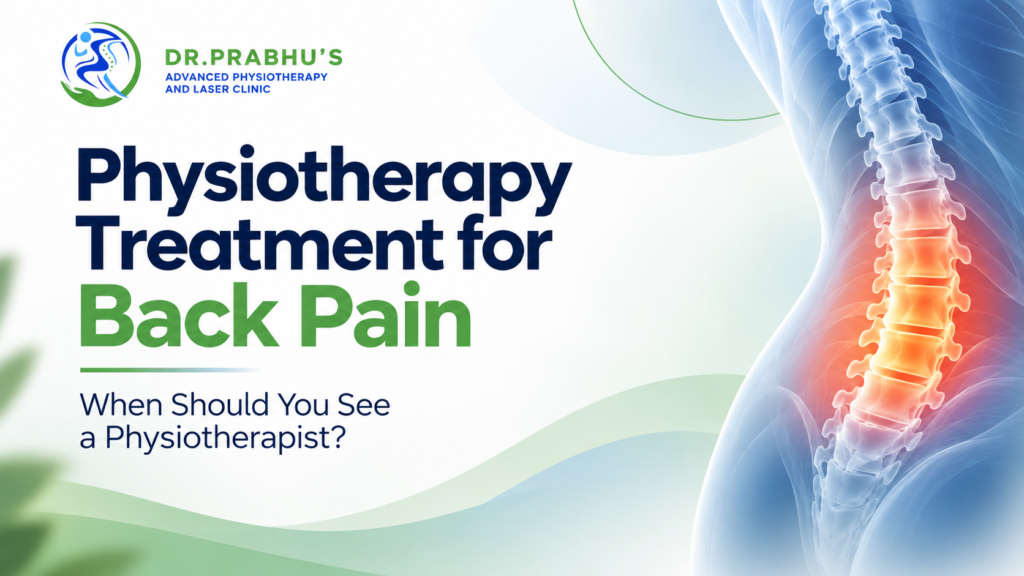
Back pain can make simple activities feel difficult. Sitting through a workday, getting out of bed, climbing stairs, driving, exercising, or even picking up your child can become uncomfortable when your back is not moving well. For some people, back pain settles with time and appropriate activity. For others, it keeps returning or begins to interfere with work and daily life. This is where a proper physiotherapy assessment can help. Physiotherapy treatment for back pain is not simply about applying a machine to the painful area. Effective rehabilitation starts by understanding your symptoms, movement patterns, physical limitations, lifestyle, and goals. At Dr. Prabhu’s Advanced Physiotherapy and Laser Clinic in Chromepet, treatment is built around an individualized assessment and a combination of active rehabilitation, manual therapy, and appropriate advanced treatment modalities. The clinic’s approach focuses on understanding how the body moves rather than looking only at the location of pain. Causes for Back Pain When to visit a Physiotherapist Assessment Best Exercises for Back FAQ What Causes Back Pain? Back pain can develop for many different reasons. In some cases, it follows an injury or sudden movement. In others, it develops gradually with prolonged sitting, repetitive activity, reduced physical activity, or changes in movement patterns. Common factors associated with back pain include: Muscle or ligament strain Prolonged sitting Repetitive movements Poor movement habits Sports injuries Reduced physical activity Age-related changes Irritation involving spinal nerves. Back pain can also present differently from person to person. You may experience stiffness, aching, restricted movement, or pain that travels toward the buttock or leg. Because similar symptoms can have different causes, it is important not to assume that every type of back pain needs the same exercise or treatment. When Should You See a Physiotherapist for Back Pain? You may want to consider a physiotherapy assessment when back pain begins affecting your normal activities or does not improve as expected. A physiotherapist can be particularly useful if you experience: Persistent or recurring back pain Difficulty bending, walking, sitting, or standing Stiffness that limits your movement Pain affecting work or exercise Difficulty returning to normal activity after an injury Repeated episodes of back pain Concerns about posture or movement Pain that is affecting your confidence in movement An assessment can help determine what movements are limited, which areas may need strengthening, and whether your symptoms require physiotherapy or further medical evaluation. What Happens During a Back Pain Physiotherapy Assessment? Good back pain physiotherapy should begin with an assessment rather than immediately choosing a treatment machine. Your physiotherapist may ask about: When your symptoms started Where you feel the pain Activities that increase or reduce symptoms Previous injuries Your daily work and activity Exercise and lifestyle habits Previous treatment Your goals for recovery The physical assessment may then look at movement, strength, flexibility, balance, posture, and functional activities. This helps the physiotherapist understand not only where you feel pain, but also how your body is moving. At Dr. Prabhu’s clinic, the stated approach is to begin with a clinical conversation and movement assessment before developing an individualized treatment plan. What Does Physiotherapy Treatment for Back Pain Involve? There is no single treatment that works for every person with back pain. Depending on your assessment, treatment may include several components. Therapeutic Exercise Exercise is an important part of rehabilitation for many types of back pain. Your physiotherapist may prescribe exercises to improve: Core and trunk strength Hip strength Flexibility Spinal mobility Movement control General physical capacity Exercises should be progressed according to your ability rather than following the same routine for every patient. The goal is not simply to exercise the painful area. It is to help you move with greater control and gradually return to activities that matter to you. Manual Therapy Manual therapy involves hands-on techniques used to address certain movement restrictions and musculoskeletal symptoms. It may be incorporated into a broader rehabilitation plan alongside exercise and movement education. Dr. Prabhu’s clinic lists manipulation therapy among its treatment options and describes its approach as combining manual therapy with technology-supported treatments where appropriate. Movement and Posture Guidance If your daily routine involves long periods of sitting, driving, lifting, or repetitive work, your movement habits may be relevant to your rehabilitation. A physiotherapist can help you understand how to modify activities and gradually increase your tolerance for them. This can be especially relevant for people who spend most of their working day at a desk. Can Advanced Physiotherapy Treatments Be Used for Back Pain? Some physiotherapy clinics use additional treatment modalities as part of a broader rehabilitation program. Dr. Prabhu’s clinic provides several advanced treatment options, including Photon Class IV Laser, TECAR Therapy and Shockwave Therapy, along with manual and exercise-based approaches. Class IV Laser Therapy Laser therapy uses light energy and is used in physiotherapy settings as part of treatment for selected musculoskeletal conditions. Whether it is appropriate depends on the patient’s condition and clinical assessment. TECAR Therapy TECAR therapy uses radiofrequency energy and is used by physiotherapists in some rehabilitation settings. It may be incorporated into a treatment plan depending on the patient’s symptoms and goals. Shockwave Therapy Shockwave therapy uses acoustic waves and is used for certain musculoskeletal conditions. It is not automatically appropriate for every type of back pain. The important point is that advanced technology should support a clinical treatment plan rather than replace assessment and active rehabilitation. What Are the Best Physiotherapy Exercises for Back Pain? There is no single exercise that can be called the best for every person with back pain. Depending on the assessment, a rehabilitation program may include: Core strengthening Bridging exercises Pelvic control exercises Hip strengthening Mobility exercises Flexibility exercises Functional strengthening The appropriate exercise depends on your symptoms, physical capacity, and the activities you need to return to. If you are experiencing significant or persistent pain, it is better to get appropriate guidance rather than selecting exercises only because they are popular online. What If Back Pain Travels Down the Leg? Back pain that travels